
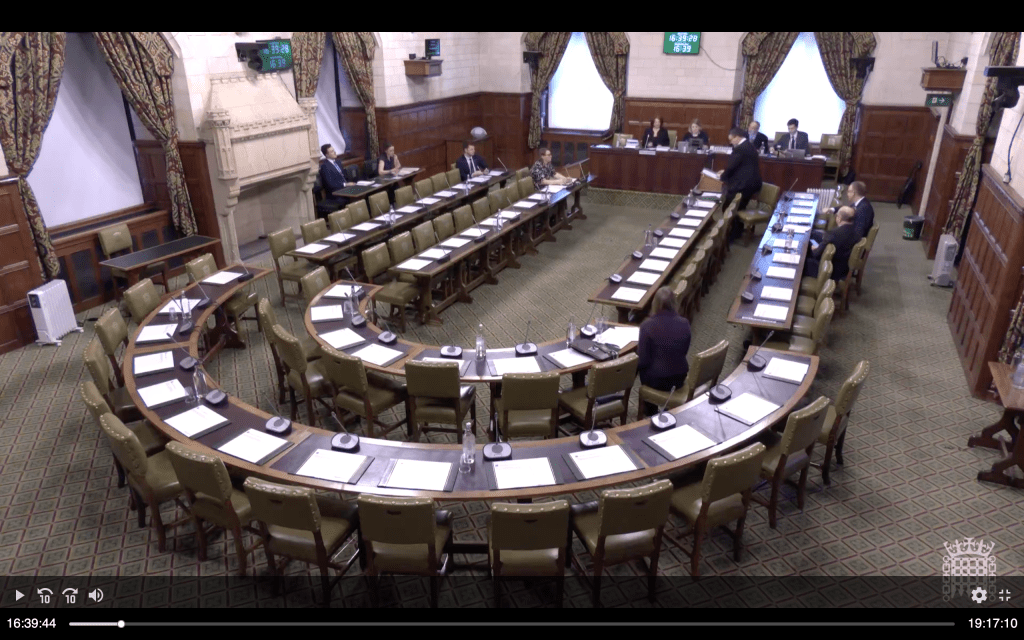
Some ten members of parliament debated the right of the public to call for a vote of no confidence in an almost empty room on Monday, March 2, managing to betray the words of the petitioners, before knocking off halfway through the debate.
E-petition 734311 reads “Give the British Public the Right to Vote No Confidence in the Government: We call on Parliament to pass a law giving the British public the power to trigger a vote of no confidence in the ruling government. Currently, only MPs can do this. We believe the public should also have the democratic right to express when they’ve lost trust in those elected to lead.”
Members didn’t quite catch on. “The petition is indicative of the public’s unhappiness with this Government,” said member john cooper.
“My honorable friend makes an excellent point that goes to the nub of the motivation behind the petition, which lies not so much in a desire for constitutional change but in a feeling of being let down by this,” said member john lamont, not necessarily respecting the precise wording of the petitioners.
Straying somewhat off topic, lamont continued: “Peter Mandelson was appointed US ambassador despite his links to a notorious paedophile.”
Member mike wood brought the debate back on track: “As the Cabinet manual explicitly states, a Government’s authority flows from their ability ‘to command the confidence of the elected house of commons’ … Introducing a direct recall mechanism for removing a Government or triggering a general election before the parliamentary term is due to expire would raise significant practical and constitutional questions,” he said.
For wood then, involving the the public would be too complicated and the matter should rest with the trusted members.
Wood was apparently drowning under the weight of complexity that genuine democracy would unleash: “On a national level, how could we be confident that a signature is verified?”
Member anna turley explained why a democratic system would be undesirable: “Our long-standing constitutional arrangements facilitate stability, while balancing the need to test the confidence in the Government of the day in the elected House of Commons. Altering those arrangements could risk creating a constant revolving door and an inability to achieve anything, and would incur significant costs to the public purse, given the expenses associated with administering general elections. Overall, such changes would serve only to undermine public trust in politics, create more instability and cause paralysis in Government.”
Turley explained why the public is already quite empowered enough “All of us here know that our constituents are able to—and do—make representations to us as their local constituency MPs, and we in turn champion their views in this place and make representations to Ministers in Government. In the event that voters signal a desire for an election, the public’s voice will be channelled effectively through their local MPs across the House.” You lucky people.
For turley, the danger was entirely clear. Democratising the system could “undermine the primacy of this place [the house of commons], the cradle of democracy, by confusing the clear lines of accountability that general elections provide.” It should be noted that the house of commons is in no imaginable way a “cradle of democracy” as turley unforgivably calls it, given it is not where democracy originated.
“I had not anticipated having an hour to fill—I joke; I am not going to fill the hour,” said last speaker lamont at 17:01, with members having apparently concluded the matter with 59 minutes to spare.
Time enough for Lamont to again betray the words of the petition, for he knew what they really meant: “The petition is less about the proposed constitutional change and more about the feeling, which many people have, of being let down and betrayed by this government.”
 .The big dEE .
Leave a comment